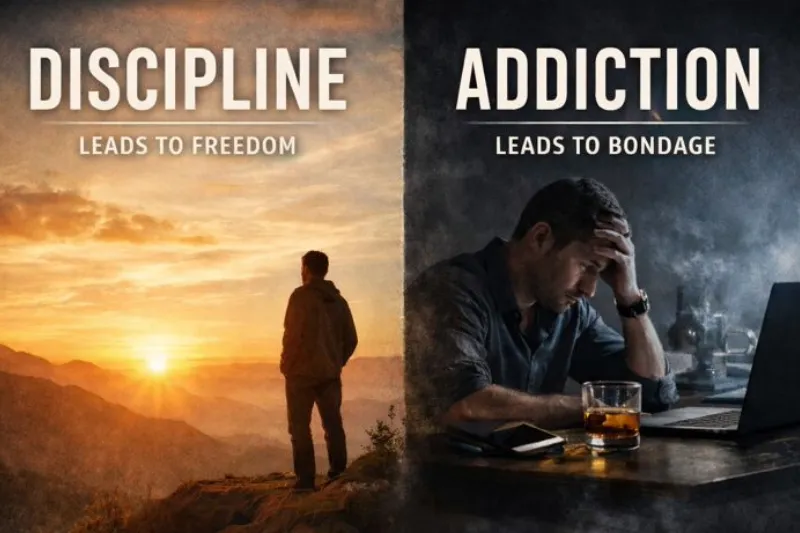
Discipline, Addiction, and the Leadership Wake-Up Call We Don’t Want
I recently started reading The Forgotten Way by Matthew Kelly, and something major stood out to me:
“You will never have more happiness than you do discipline.
If you wish to have more happiness, increase the discipline in your life. These two things are directly and proportionately related to one another.The opposite of discipline is addiction.”
The longer I sat with it, the more confronting it became — especially for leaders.
Because if we’re honest, many of us pride ourselves on being disciplined.
We wake up early.
We work hard.
We push through.
We perform.
We produce.
And yet…
We’re anxious.
We’re exhausted.
We’re restless.
We’re burned out.
So the question becomes:
What if what we’re calling discipline is actually addiction?
When Discipline and Addiction Look the Same
From the outside, discipline and addiction can look identical.
Both are consistent.
Both are repetitive.
Both are habits.
The difference isn’t behavior — it’s dependency.
Discipline serves your purpose.
Addiction numbs, distracts, or controls pain.
Discipline creates freedom.
Addiction creates bondage — even when it looks productive.
And leaders are especially vulnerable to confusing the two.
The Hidden Addictions of High Performers
Most leaders don’t see themselves as “addicted.”
But addiction doesn’t always look destructive or obvious.
Sometimes it looks like:
• Staying busy so you don’t have to slow down and feel
• Overworking because rest feels unsafe
• Alcohol to turn your mind off at night
• Food used for comfort or control
• Porn kept hidden behind success and influence
• Scrolling endlessly to avoid silence
• Achievement as a substitute for worth
Even leadership itself can become an addiction —
when it’s used to feel important, needed, or in control.
And the most dangerous addictions?
The ones that are rewarded by society.
When Success Becomes the Idol
Here’s where this gets even more personal.
Without intention, leaders can begin to make life about:
• Proving something
• Being admired
• Being needed
• Being powerful
• Being successful
And slowly, success replaces alignment.
Achievement replaces obedience.
Control replaces trust.
We may still call it discipline…
But if it’s driven by fear, ego, or identity — it’s no longer life-giving.
As Matthew Kelly points out, discipline is meant to serve happiness.
But happiness doesn’t come from self-glorification.
It comes from living in right order.
Discipline That Leads to Freedom (Not Burnout)
True discipline doesn’t shrink your life.
It expands it.
Healthy discipline:
• Creates space for rest
• Honors your limits
• Builds self-control, not compulsion
• Strengthens your ability to choose — not escape
• Keeps God at the center, not success
Discipline aligned with God doesn’t demand everything from you.
It orders your life so you can love, serve, and lead well.
A Question Worth Sitting With
So here’s a question I invite every leader to sit with honestly:
What would happen if you removed the thing you rely on most to cope?
Would you feel free?
Or would you feel exposed?
That answer tells you everything.
Choosing Alignment Over Addiction
This isn’t about judgment.
It’s about awareness.
And awareness is the first step toward freedom.
The most powerful leaders I know aren’t the most driven —
they’re the most aligned.
They lead from clarity, not compulsion.
From discipline, not dependence.
From surrender, not control.
And that kind of leadership doesn’t just produce results.
It produces peace.
Final Reflection
Discipline isn’t about doing more.
It’s about choosing what actually leads to life.
And addiction — no matter how polished — always leads us away from it.
If this resonated, take a moment to sit with it.
And if you sense it’s time to create space for deeper alignment — to look honestly at what’s driving you and what might be quietly costing you — support can make all the difference. If you’re ready to explore that, I’d be honored to walk alongside you.
Schedule a complimentary discovery session here and make sure to mention you read this blog in the application portion.